
Solutions · family
ISO Standard
New and one-way ISO boxes, sourced, re-certified and delivered anywhere in Central Europe.
- 6 to 45 ft
- ISO 668 1C to 1EEE
- CSC re-inspection
- 45 types with published figures
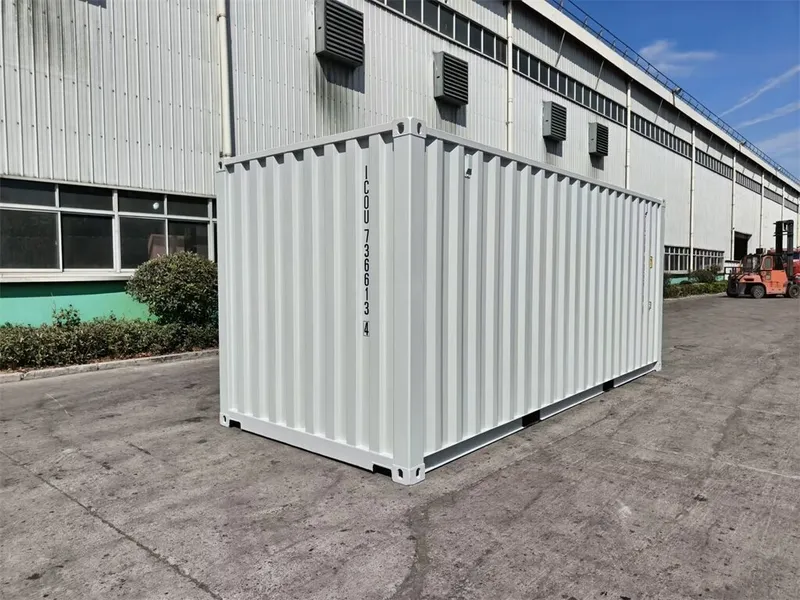
New one-way 20 ft ISO container in the Bánovce yard, doors closed
The baseline steel box. Corten shell, ISO 1161 corner castings, stackable 1CC, doors at one end or wherever you need them. Tanax sells them new, one-way and used, re-certifies them under CSC, and repaints them to your RAL before they leave the yard. If the box is standard, this is the cheapest way to buy it. If it is not standard, start at Custom.
In 3D
The unit beside a person
Drawn from the published millimetres of record TC-ISO-20-DV, to scale beside a person. Drag to turn it.
Drag to turn, arrow keys to rotate
Finish as the published specification states it: RAL 5010 / 7035 / 7042 / 9010.
The openings and fittings are the ones the specification describes. Their positions are representative and carry no dimension.
Specification
Dimensions
- External lengths
- 1,829 / 2,438 / 2,991 / 6,058 / 12,192 / 13,716 mm
- External width
- 2,438 mm (2,500 mm pallet-wide on 45 ft)
- External heights
- 2,438 / 2,591 / 2,896 mm
- ISO 668 designations
- 1C, 1CC, 1CCC, 1AA, 1AAA, 1EEE
Structure
- Construction material
- Corten weathering steel
- Floor
- 28 mm hardwood plywood standard, 21 mm on one-way builds
- Corner castings
- ISO 1161, forklift pockets on 20 ft
- Stacking
- 1CC, 3 high loaded
Capacity
- Tare, 20 ft DV
- 2,000 kg
- Max payload, 20 ft DV
- 28,480 kg
- Max gross mass
- 30,480 kg (32,500 kg on 45 ft)
- Internal volume, 20 ft DV
- 33.1 m³
Finish
- Standard RAL options
- 5010, 7035, 7042, 9010, 6019
- Marking
- CSC plate, owner code per ISO 6346
How it is built
The decisions behind the numbers
Sourcing, three routes.
New-build direct from the shell manufacturer, one-way units that arrive in Europe having already carried a paid cargo, and used units bought landed. The three routes differ by roughly a factor of three on price for the same box. One-way is usually the sweet spot: a nearly new container at a fraction of new-build landed cost, because the sea freight was somebody else's cost.
Why freight decides the price.
A new 20 ft shell shipped from Asia to an Adriatic port lands at a sea-freight cost that can exceed the price of the container itself. A one-way unit lands in Northern Europe for a fraction of that. Tanax buys landed and quotes you the landed number, not a factory-gate number plus a surprise.
New, one-way or used: how to choose.
Buy new when the specification has to be exact: one RAL across a fleet, a multi-door layout, a pallet-wide or high-cube reefer, an offshore unit with its DNV 2.7-1 certificate. New is also the only route that reaches every type in the table, because depot stock on the other two routes is whatever the trade happened to move. Buy one-way when a standard 20 or 40 ft dry van or high cube will do and the date matters: the unit has carried one paid cargo, its CSC plate was issued at build, and the price sits between used and new. Buy used when the box is going to stand still: site storage, a workshop, a shell for a conversion. A used unit is graded rather than specified. Cargo-worthy means it can still go to sea on its plate; wind and watertight means it keeps the rain out and nothing more. Ask which grade is being quoted, and ask for the plate date.
Re-certification.
Every unit sold as CSC-approved gets a documented inspection and a new plate. Tare and max gross are re-declared after any structural modification, which is the part most resellers skip.
What CSC re-inspection involves, and what you receive.
The plate on the door is a statement about the whole container: the maximum gross mass it may be loaded to, the stacking and racking values it was tested to, and the date its next examination falls due. Under the convention the first examination is due within 5 years of manufacture and every one after that within 30 months, unless the unit runs under an approved continuous examination programme. Re-inspection is structural: corner castings and posts, top and bottom rails, cross-members, floor, door gear and seals, with defects repaired before the plate is re-issued. You receive the plate on the unit and the certificate behind it, the dimensional inspection report, the coating thickness measurement per ISO 2808, the declaration of conformity and a delivery note listing the unit numbers. One rule follows from the plate: a container may only be loaded to the rating on its own plate. Where a catalogue figure sits above the ISO 668 rating for its designation, 32,500 kg on the 45 ft high cube, 35,000 kg on the 40 ft high cube reefer, 36,000 kg on the tank, read it as build capability until the plate confirms it.
What changes when a box is modified.
Cut an opening, weld in a frame, add a floor, and the container that left the factory no longer exists: the approval on the plate covered the original structure, so a structural modification invalidates it. Tanax re-inspects the modified unit, re-declares tare and max gross, and issues a new plate. If the unit will never go to sea the plate can be left off and the box sold as a static structure, but that is a decision to take at the order, not to discover later. The catalogue shows what a door costs in mass. A plain 20 ft dry van weighs 2,000 kg and carries 28,480 kg. Doors at both ends make it 2,300 kg and 28,180 kg. One full-length side door makes it 3,080 kg and 27,400 kg. Doors on all four sides make it 3,900 kg and 26,580 kg. Every kilogram of steel added is a kilogram of payload lost, because 30,480 kg is the ceiling either way.
Lead time by route.
Used units come from European depot stock and can be on a truck in 1 to 2 weeks. One-way units come from a landed depot in Northern Europe; the 2 to 4 weeks is mostly transport and the re-inspection. New build means a factory slot and a sea voyage, 10 to 16 weeks, and it is the only route with a slot for a non-standard configuration. Repaint and CSC re-inspection add 1 to 2 weeks to any route. The table tells you what exists; the route tells you when.
What arrives with the unit.
A dry van arrives with its locking rods, high-placed handles and a lockbox for a padlock; forklift pockets are standard on the 20 ft and smaller boxes and listed per type for the 40 ft units. An open top arrives with its tarpaulin, the removable crossbars and the straps; a hard top with its steel roof panels and the bars that secure them. A flat rack arrives with its end walls, fixed or collapsible as ordered. A reefer arrives with its machinery fitted and a T-section floor for airflow; you connect it to power or to a clip-on diesel generator. An offshore unit arrives with roof padeyes and a certified sling set, because the DNV 2.7-1 certificate covers the lifting set as much as the box. A tank arrives as a 24,000 l barrel in its frame. What does not arrive: a crane at your end, a foundation, and customs paperwork for a unit crossing a border, all listed under Scope.
Repaint.
Blasting to Sa 2.5 per EN ISO 8501-1, then the coating system the environment needs. Standard is a two-coat zinc-rich system; corrosive or coastal service gets the full ISO 12944 C4-H build described under AI & DC Power.
Configurations
Variants by ISO group, each with its catalogue photograph
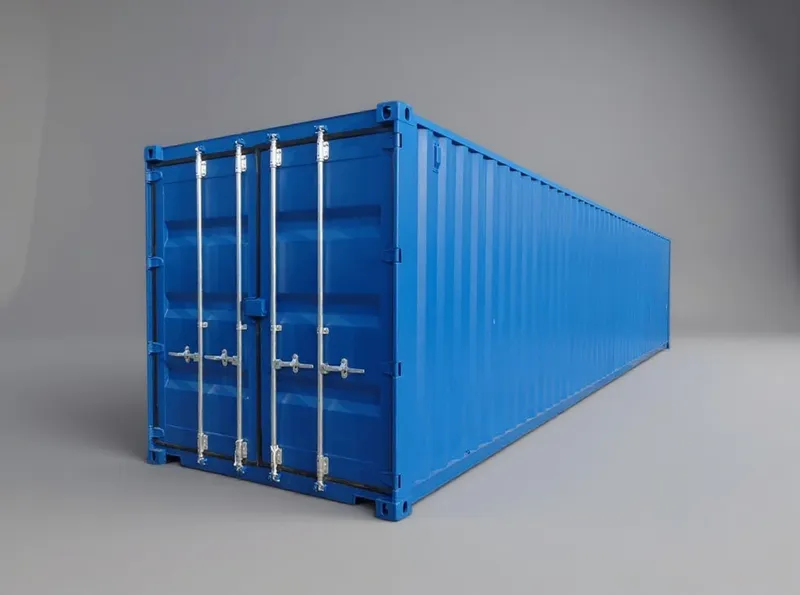
40 ft dry van (TC-ISO-40-DV), door end, doors closed 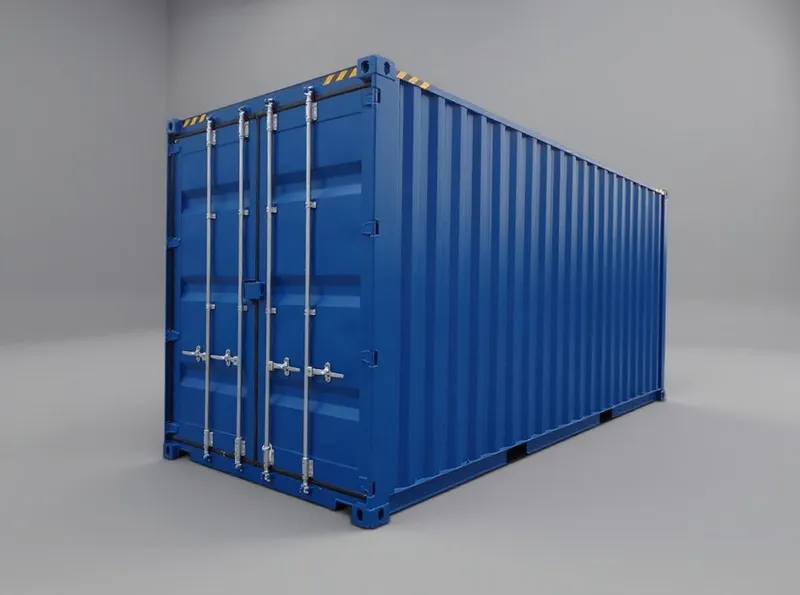
20 ft high cube (TC-ISO-20-HC), door end, doors closed, 2,896 mm external height High cube, 20 to 45 ft
- 1CCC / 1AAA / 1EEE
- 2,896 mm external
- 37.4 / 76.3 / 85.9 m³
- pallet-wide 2,500 mm on 45 ft
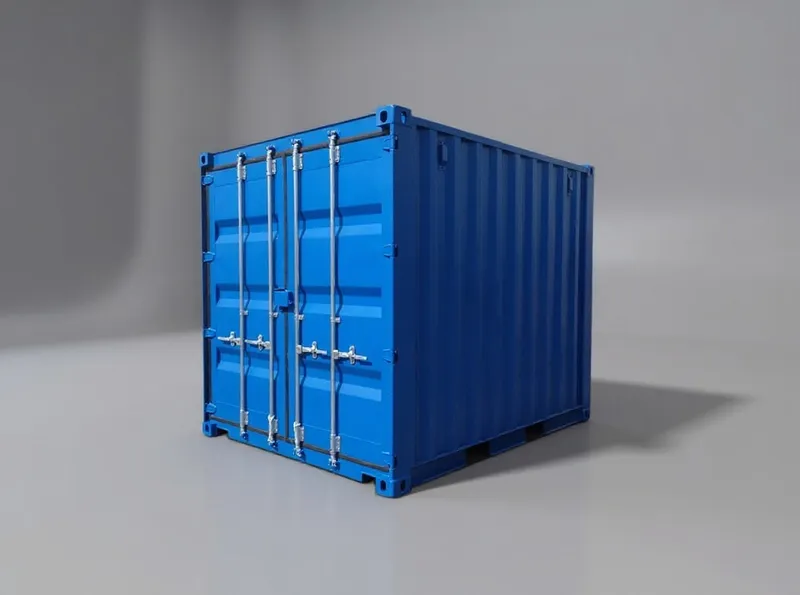
10 ft mini container (TC-MINI-10), door end, doors closed 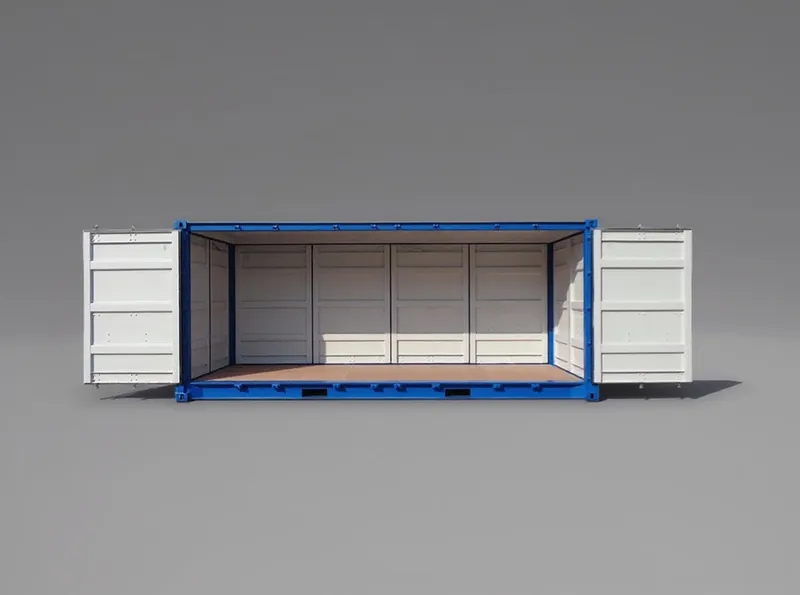
20 ft double door plus double side door (TC-MD-20-DD-DSD), side doors open along the full length Multi-door, 20 and 40 ft
- doors at both ends, one or both sides
- 13 layouts
- tare 2,300 to 6,480 kg
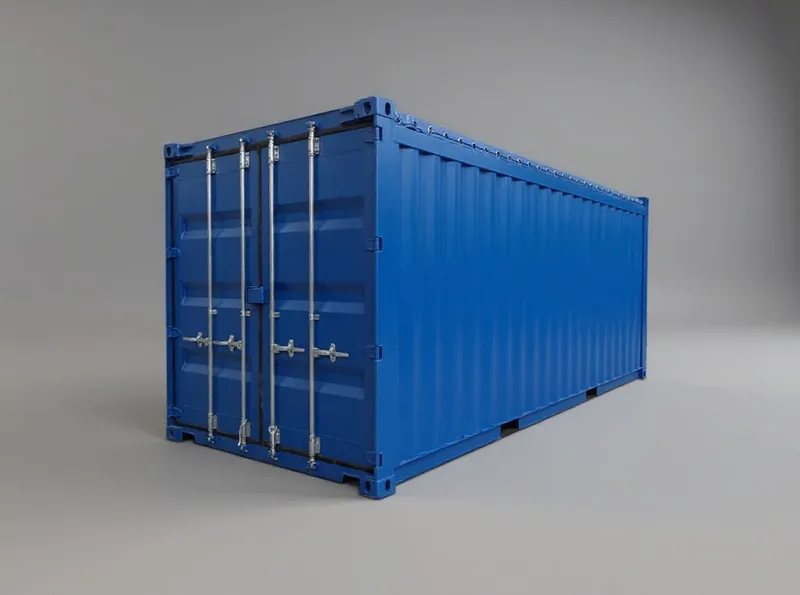
20 ft open top (TC-OT-20), door end, doors closed Open top and hard top
- tarpaulin on removable bows, or steel roof panels
- 20 and 40 ft
- roof opening 5,652 × 2,190 mm on 20 ft
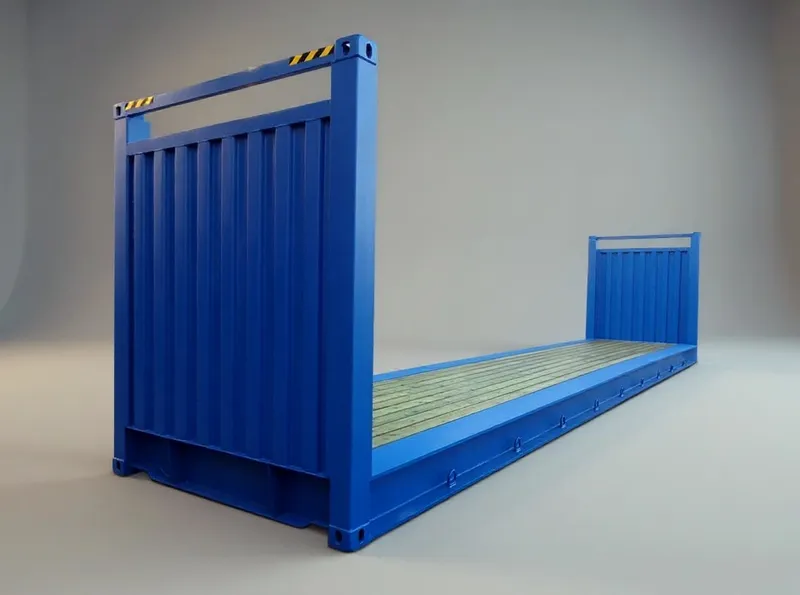
40 ft flat rack (TC-FR-40), end walls raised, open timber deck Flat rack, 20 and 40 ft
- end walls fixed or collapsible
- 42,100 kg payload on 20 ft
- 24,120 kg on 40 ft
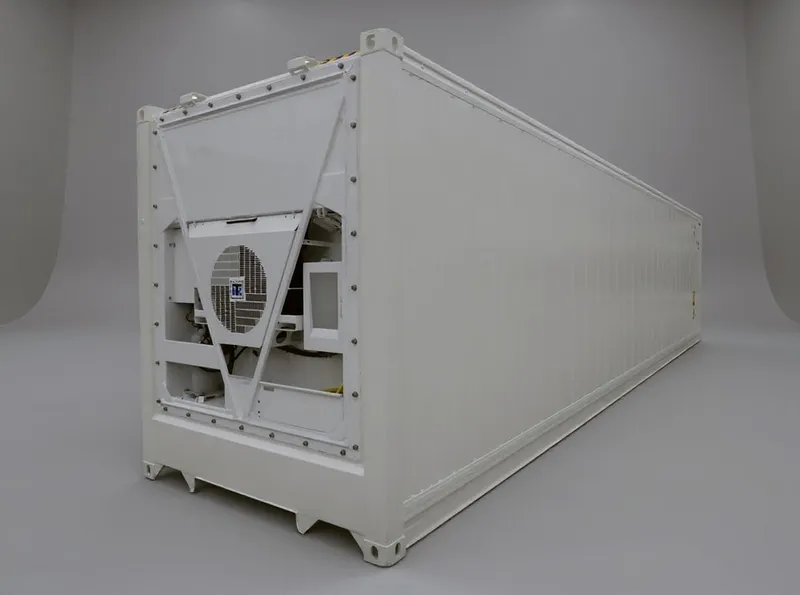
40 ft high cube reefer (TC-RF-40-HC), machinery end Reefer and insulated
- integral machinery, T-section floor
- 20 ft, 40 ft high cube, 45 ft pallet-wide
- insulated body without machinery
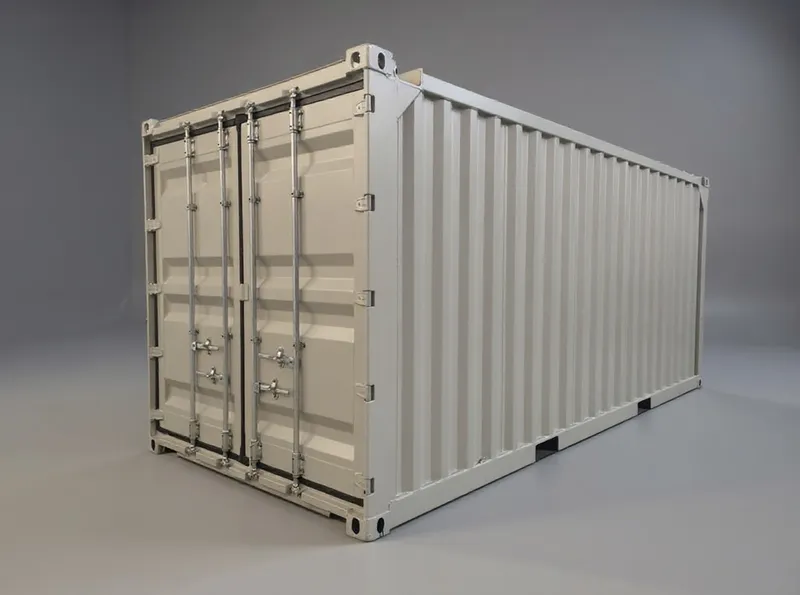
20 ft offshore container (TC-OFS-20), reinforced external frame, doors closed Offshore, 10 and 20 ft
- DNV 2.7-1 / EN 12079-1
- roof padeyes and sling set
- max gross 10,820 to 24,750 kg
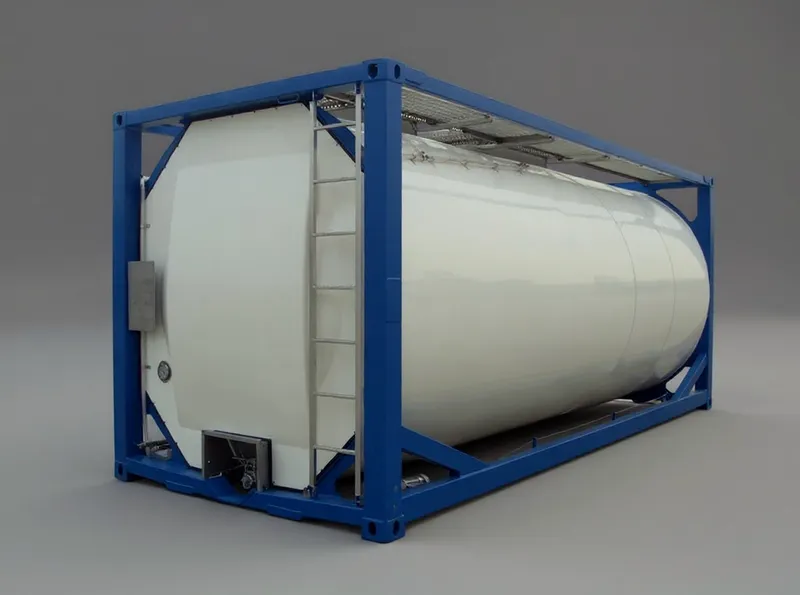
20 ft tank container (TC-TNK-20-ISO), 24,000 l barrel in an ISO frame Tank, bulk, half height
- 24,000 l barrel in an ISO frame
- bulk with roof manholes and discharge hatches
- half height 1,295 mm, open top
Specification table
45 ISO types, every published figure
Every ISO-frame type in the catalogue, grouped by length. Filter by type, sort a column, and open a row for the catalogue page with the same figures and the manufacturer's notes. Units sit in the header once.
A blank cell is a figure the manufacturer does not publish. Nothing is estimated, interpolated or borrowed from a similar type.
Figures not published by the manufacturer: Stackable levels
Figures as published by the manufacturer and cross-checked against ISO 668 and ISO 6346 on each catalogue page. The rating on a unit's own CSC plate governs what may be loaded.
Build detail
What the detail photography shows
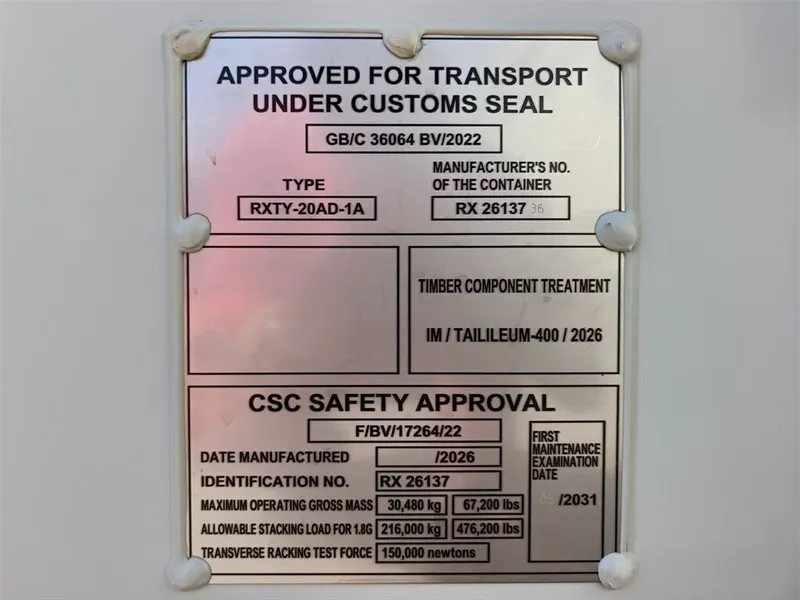
CSC safety approval plate on a re-certified container 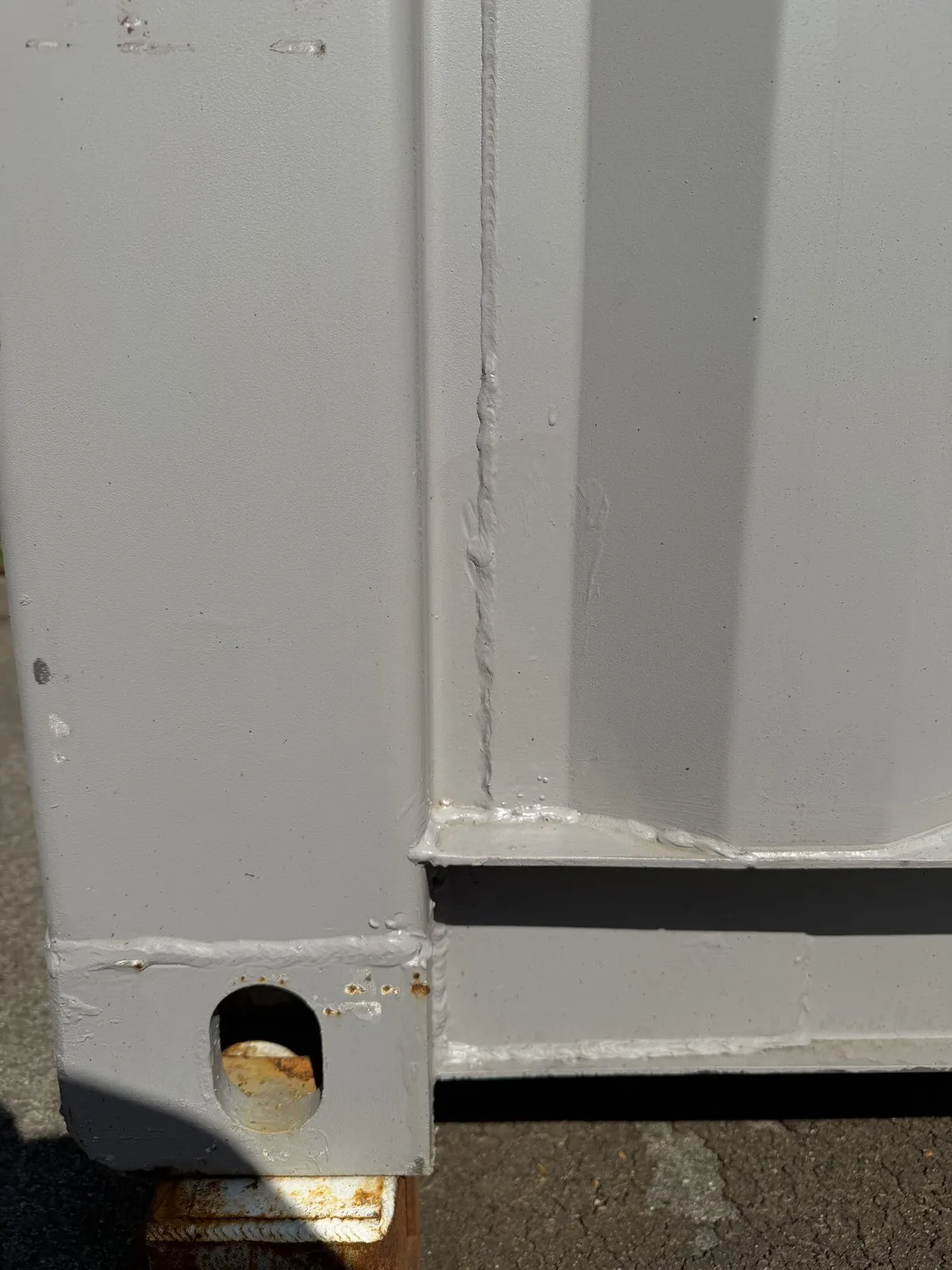
ISO 1161 corner casting 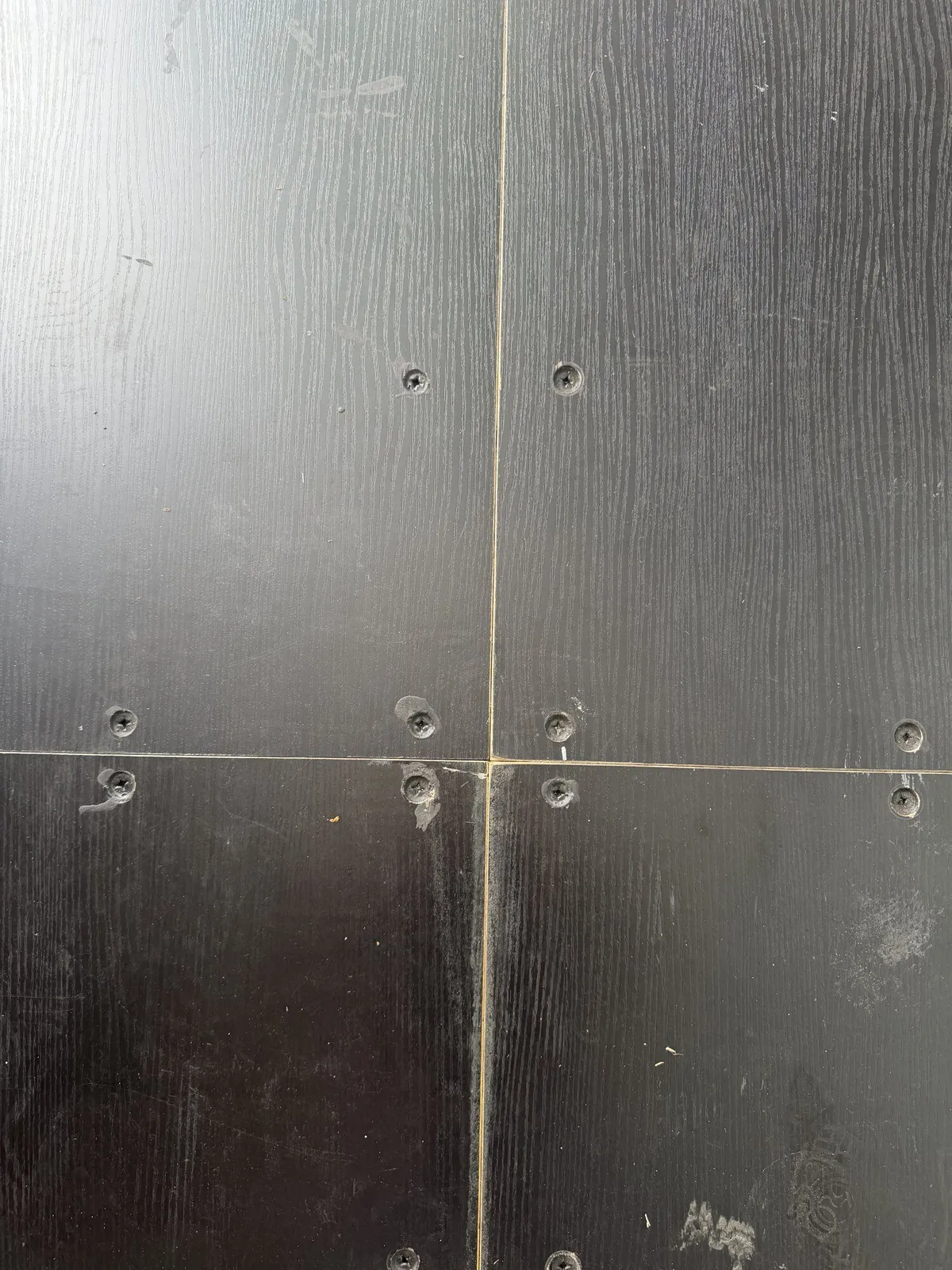
Plywood floor and cross-member 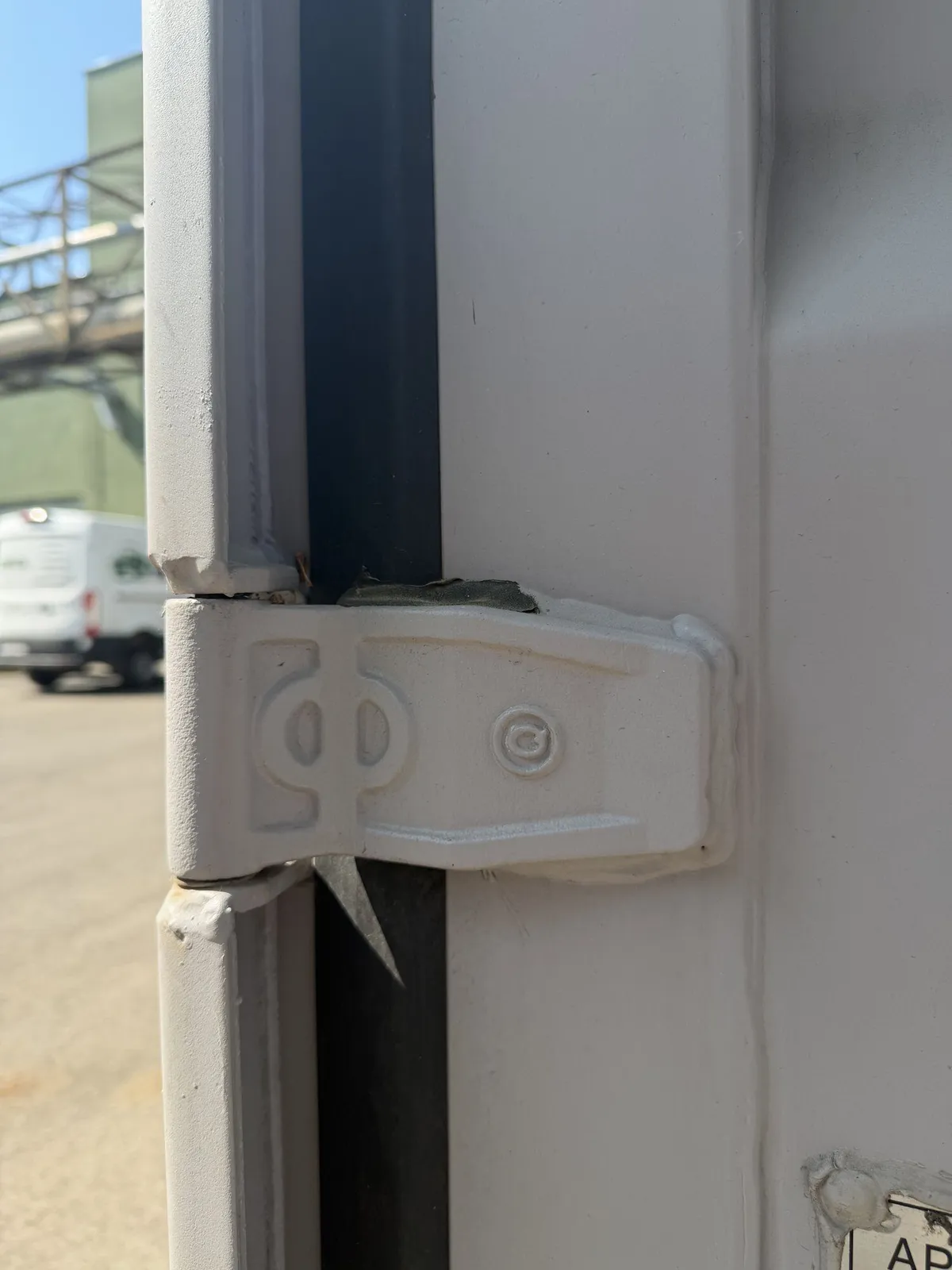
Door hinge and locking bar 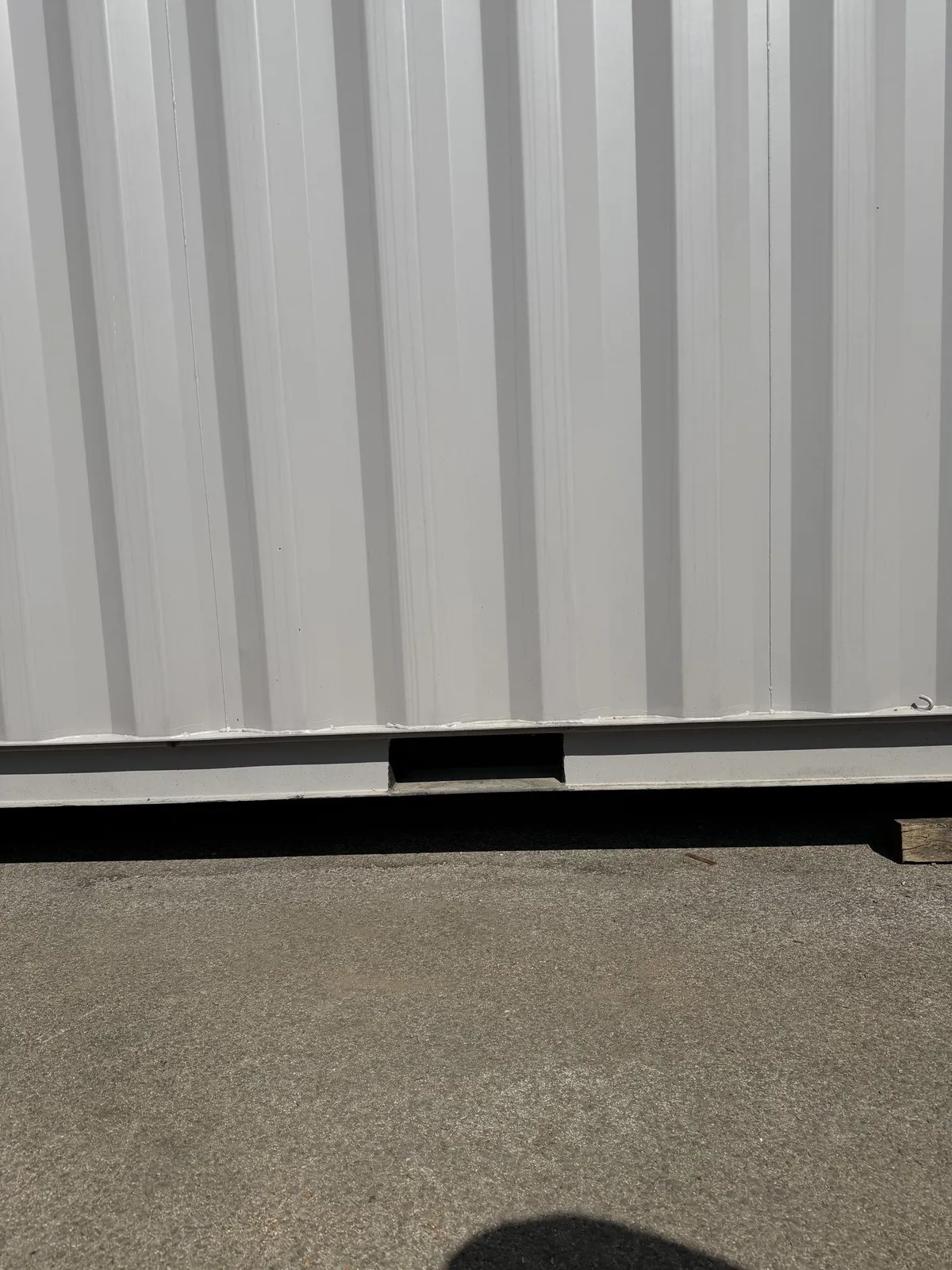
Base rail and forklift pocket 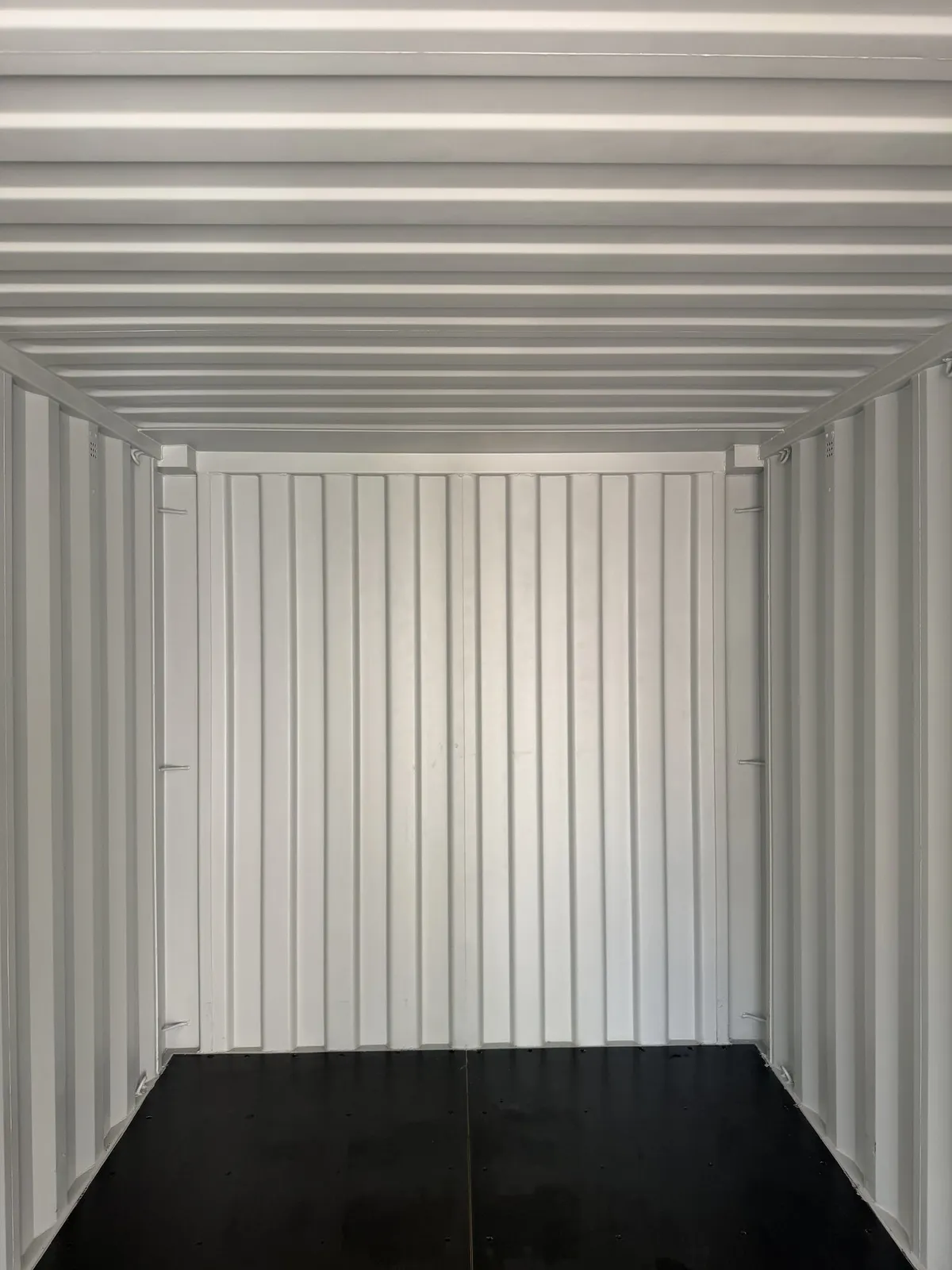
Empty interior, corrugated walls and plywood floor 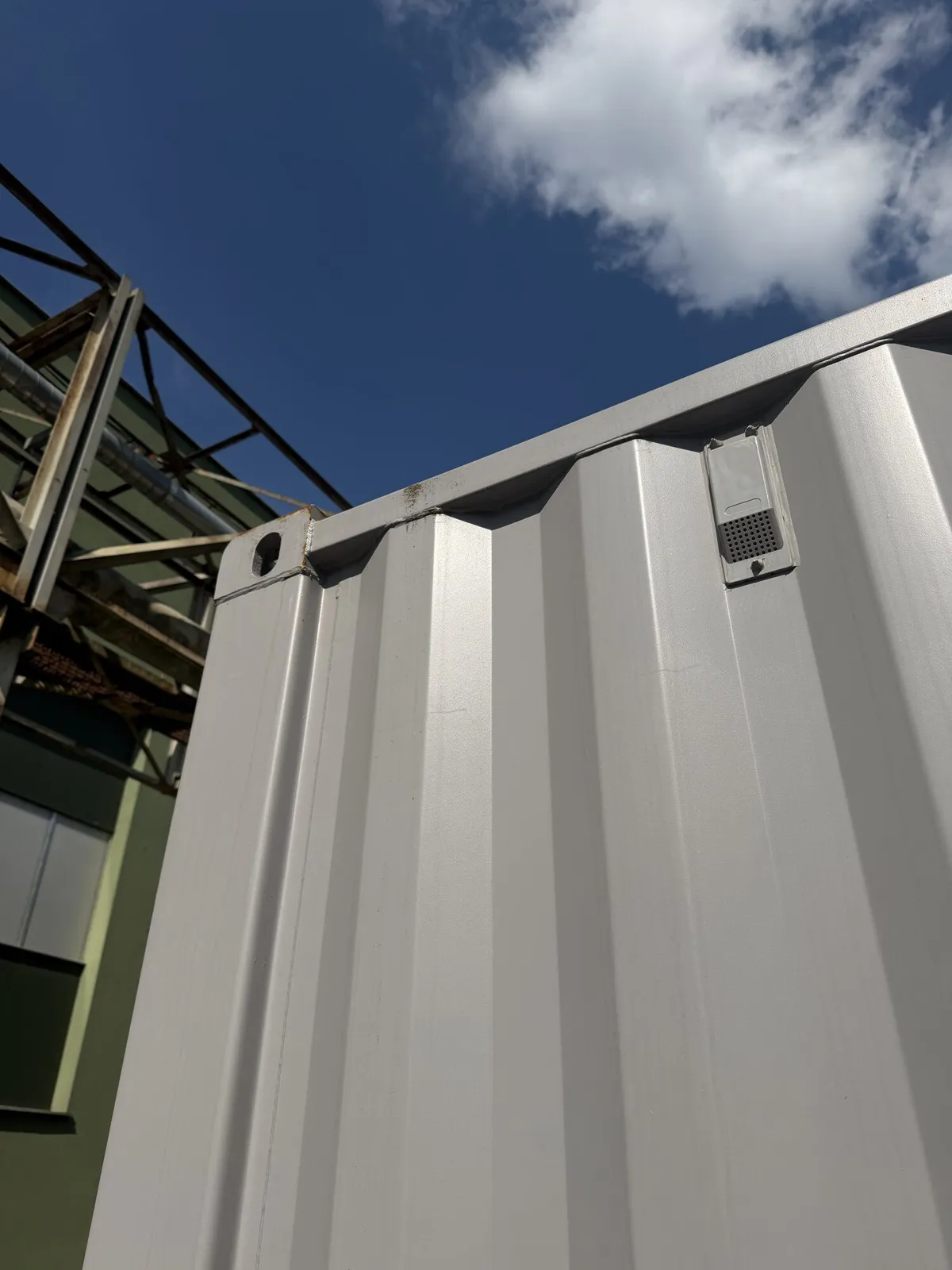
Corner post and door frame after re-inspection 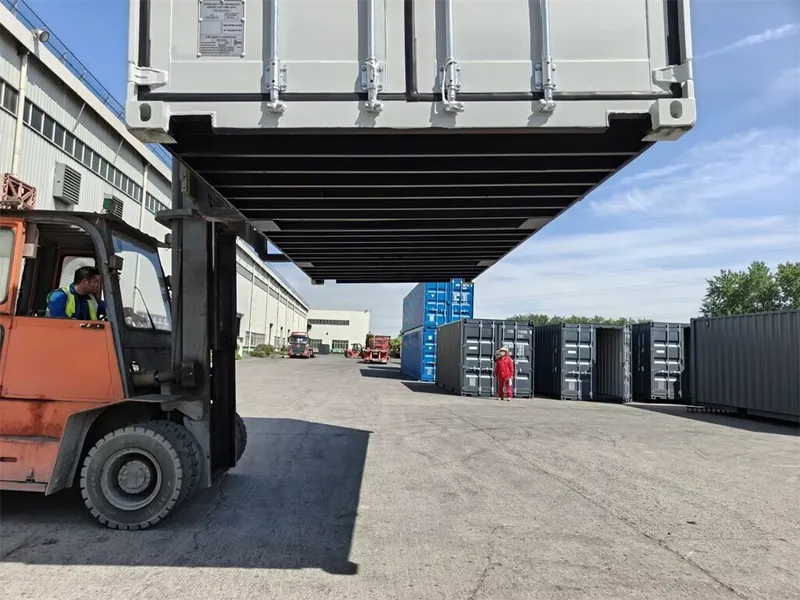
Handling: a 20 ft container lifted by forklift on its pockets 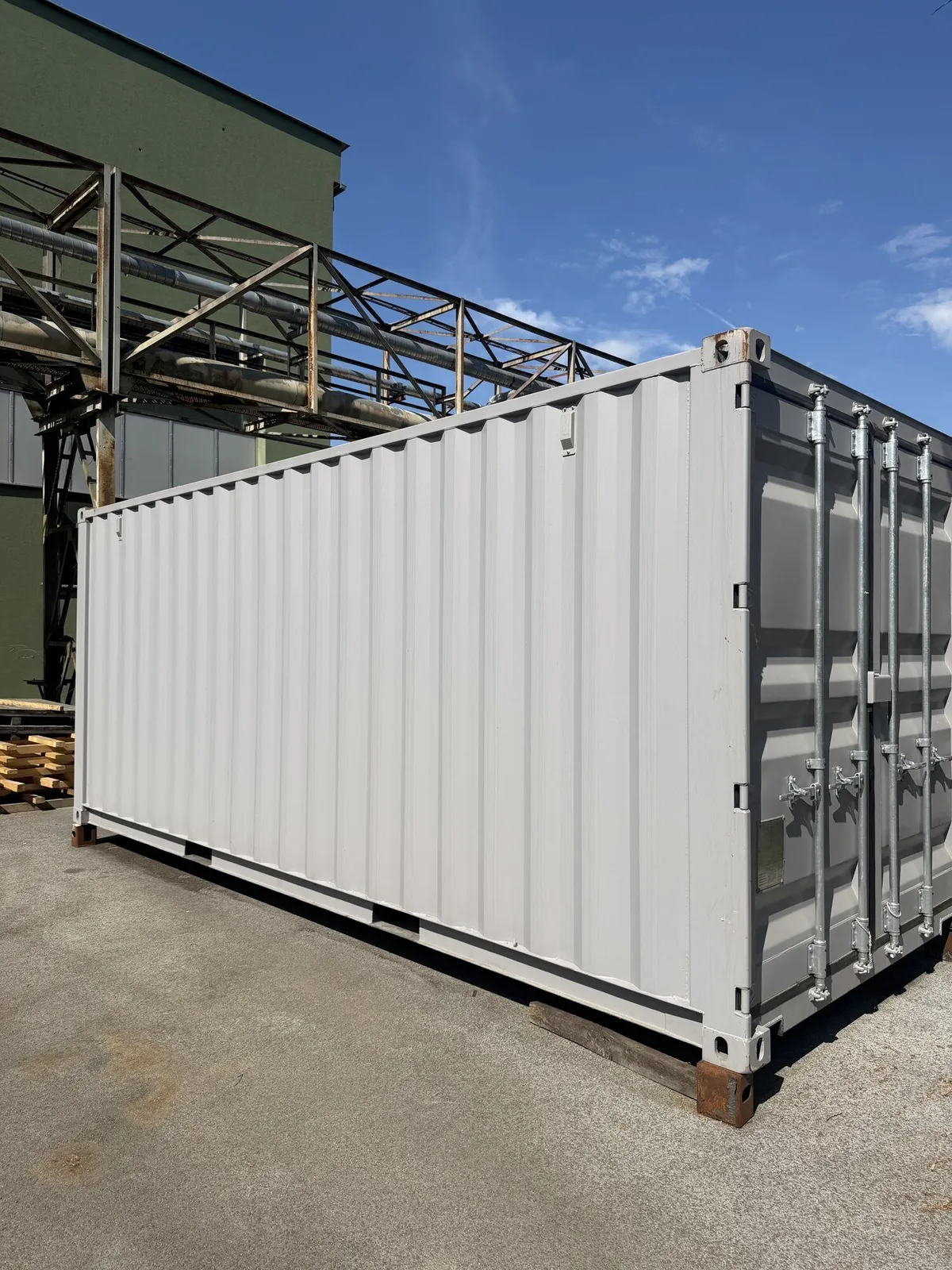
20 ft container in the yard, side and end doors
Standards
What we build to and what we issue
- ISO 668:2020
- ISO 1496-1
- ISO 1161
- ISO 6346
- CSC 1972, as amended
- EN ISO 8501-1
| Standard | What it covers |
|---|---|
| ISO 668:2020 | External dimensions and designation |
| ISO 1496-1 | Structural test requirements, general cargo |
| ISO 1161 | Corner castings |
| ISO 6346 | Size and type codes, owner marking |
| CSC 1972, as amended | Safety approval plate and periodic examination |
| EN ISO 8501-1 | Surface preparation grade Sa 2.5 |
Documentation issued
CSC safety approval plate and certificate, dimensional inspection report, coating thickness measurement per ISO 2808, declaration of conformity, delivery note with unit numbers.
Proof
Deployments with a number in them
- 01
200 × 20 ft
One-way ISO 1C units sourced and specified in a single 2026 procurement round.
Read the case study - 02
2,591 mm
The height decision on a defence storage batch. A 2,600 mm irregular height would have made a fixed transport frame mandatory and quadrupled the sea freight. Standard height was specified instead.
Read the case study - 03
94 SKUs
Published with full dimensional and capacity data, so a buyer can size a job before speaking to anyone.
Read the case study
Scope
What the price includes, and what it does not
Included
- Container
- CSC certification or re-inspection
- Repaint to one RAL
- Dimensional and coating inspection report
- Loading at Bánovce
Not included
- Delivery to site (quoted separately, typically €500-1,000 per unit within Central Europe depending on origin)
- Crane or hiab at your end
- Foundation or hard standing
- Customs where applicable
If we have not built exactly this before, we will say so and tell you what we have built that is closest. Two prototype programmes in this factory were delivered below cost because nobody said that early enough. We do not do that any more, to you or to us.
Lead times
By variant
| Variant | Lead time |
|---|---|
| Used, ex-stock at a European depot | 1-2 weeks |
| One-way, from a landed European depot | 2-4 weeks |
| New build, sourced | 10-16 weeks including sea freight |
| Repaint and CSC re-inspection, added to any of the above | +1-2 weeks |
Engagement
Four ways to buy
Buy a catalogue unit
Pick from 94 published SKUs with full specifications, get a price, get a delivery date.
Modify a catalogue unit
Start from a standard shell and change what needs changing. Fastest route to a non-standard requirement.
Build to your specification
You bring the specification or the drawings, we review them, we build. Prototype and serial priced separately.
Subcontract fabrication
You are the prime, we are the hall. EN 1090-1 EXC2 capacity with AQAP 2110 assurance behind it.
Process
Specification to delivery in five steps
- 01
Send the specification.
A drawing, a tender annex, or three sentences. Whichever you have.
- 02
Review, in writing.
We tell you what is missing or contradictory before anyone quotes. 3-5 working days.
- 03
Quotation.
Bottom-up: material at purchase cost, co-operation, direct hours at a fully absorbed rate. 2-3 weeks for a complex build.
- 04
Design freeze and build.
Changes after freeze are variations, priced and agreed.
- 05
Test, document, deliver.
Factory acceptance where specified, full document pack, delivery and installation where quoted.
FAQ
Questions procurement asks
What is a one-way container?
A container that has made one loaded voyage and been sold at destination rather than repositioned. Structurally near new, priced far below a new-build landed unit, because the sea freight was already paid by the cargo owner.
Can you re-issue a CSC plate after modification?
Yes. Structural modification invalidates the original approval. Tanax re-inspects, recalculates tare and max gross, and issues a new plate.
Which RAL do you hold as standard?
5010, 7035, 7042 and 9010 across the catalogue, 6019 on defence work. Any RAL is available; non-standard colours add lead time, not much cost.
Do you sell single units?
Yes. Volume changes the price per unit, not whether we will quote.
What is the difference between 1CC and 1CCC?
Height. 1CC is 2,591 mm, 1CCC is the 2,896 mm high cube. 1CCC appears in the ISO 668:2020 table but not in the 2013 edition, which is why older specifications sometimes do not list it.
Is the payload in the table what I can load?
It is the manufacturer's figure for the type. What you may load is the rating on the unit's own CSC plate minus what the box weighs, and on a used or modified unit the plate can say less than the table. Read the plate, not the brochure.
Why is the 20 ft flat rack rated 45,000 kg when ISO 668 says 30,480 kg?
The flat rack in the catalogue carries a heavy-duty rating from its builder: 42,100 kg payload against 45,000 kg gross. ISO 668 rates the 1CC footprint at 30,480 kg. Both are true of different products, and the plate on the unit decides which one you have. Do not size a job on the higher figure until you have seen it.
Which types are in stock and which are built to order?
Standard 20 and 40 ft dry vans and high cubes move through the one-way and used routes and are usually the fast ones. Multi-door layouts, pallet-wide units, reefers above 20 ft, offshore, tank, bulk and half height are new-build routes with the lead time that goes with them. Every row in the table links to its catalogue page, and the quotation states the route.
Send us the specification. A drawing, a tender annex, or three sentences.
You will get a written review of it inside a week, whether or not you buy anything.
Where to go next
Related families
- CustomOne-offs, prototypes and things that do not have a product code yet.
- Special PurposeContainers built around a function that does not exist as a product: fire training, weapon storage, hazmat, field kitchens, cold chain.
- Office & LivingInsulated accommodation and office modules, single units to three-storey buildings.
Related sectors
Related case studies