EMERGENCY SERVICES

Built to deploy when systems fail

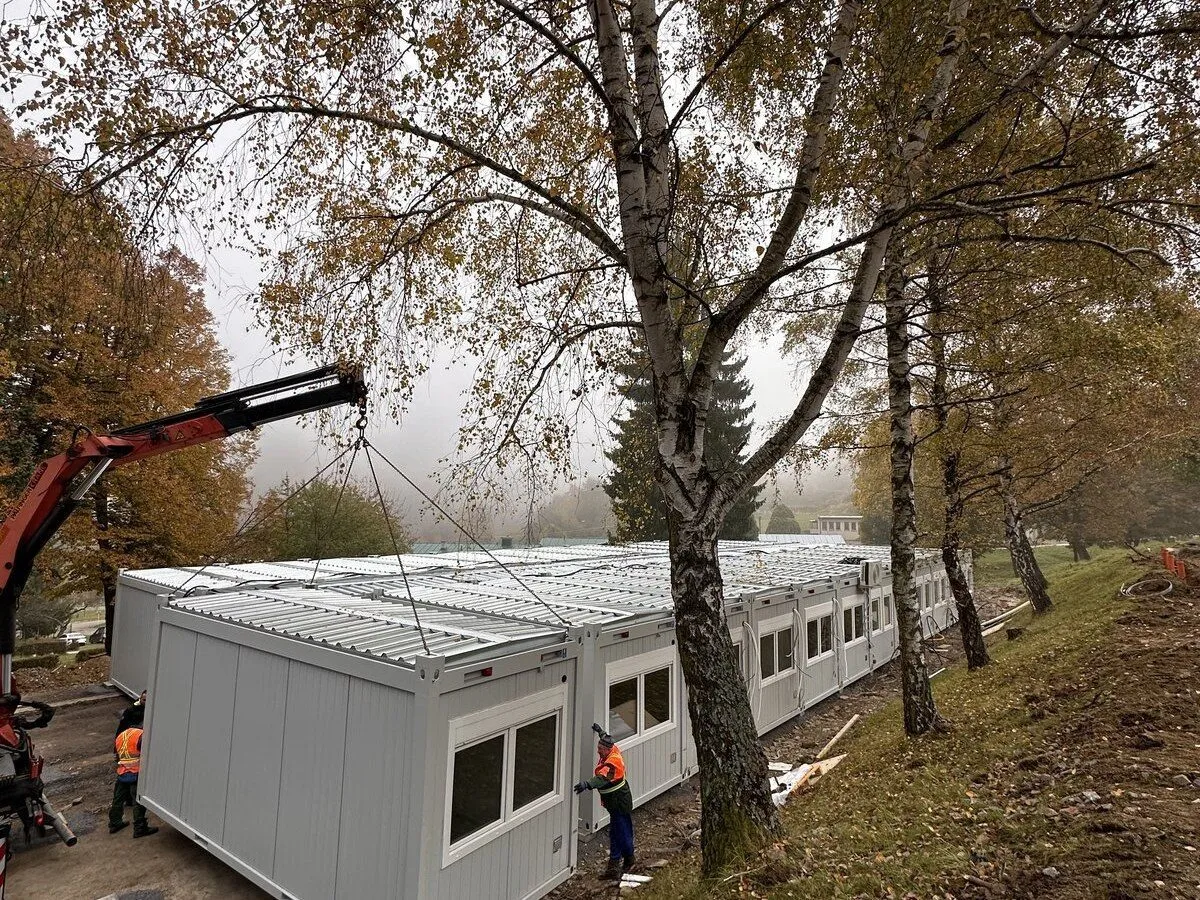
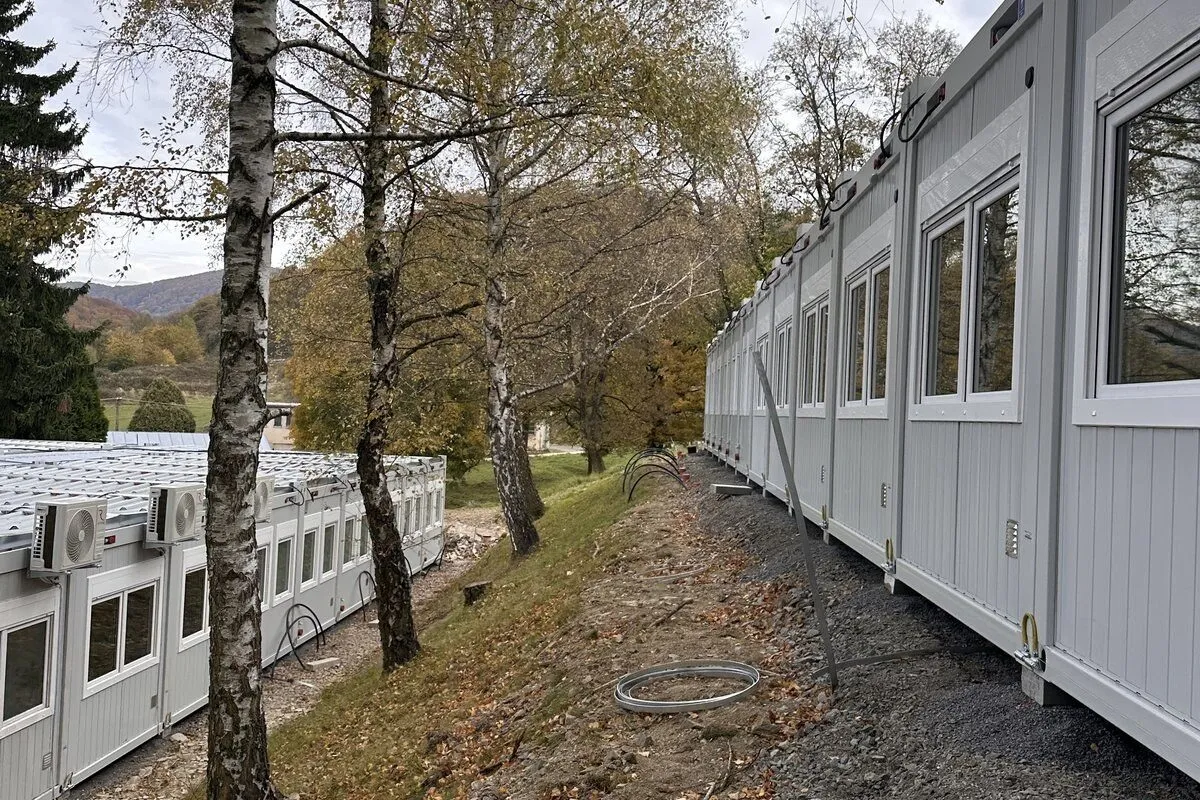
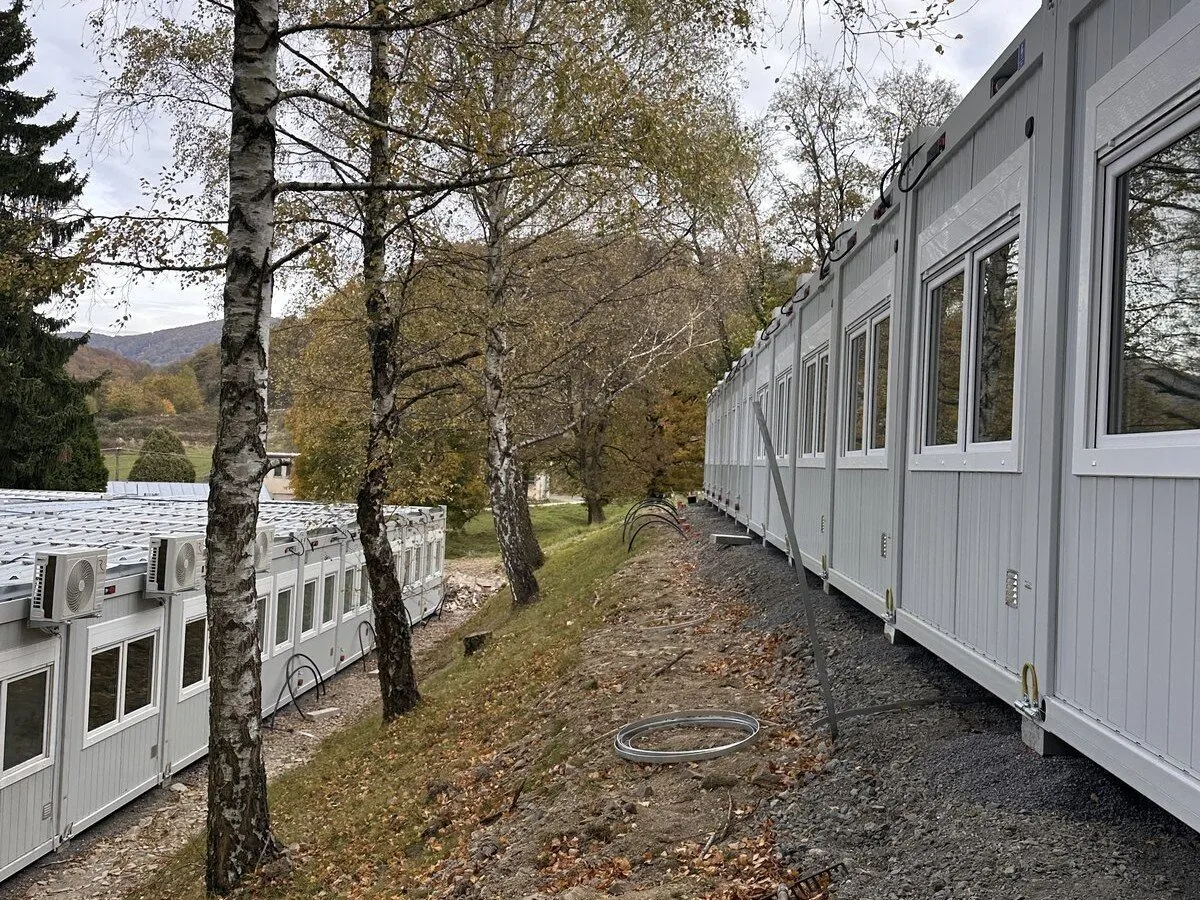
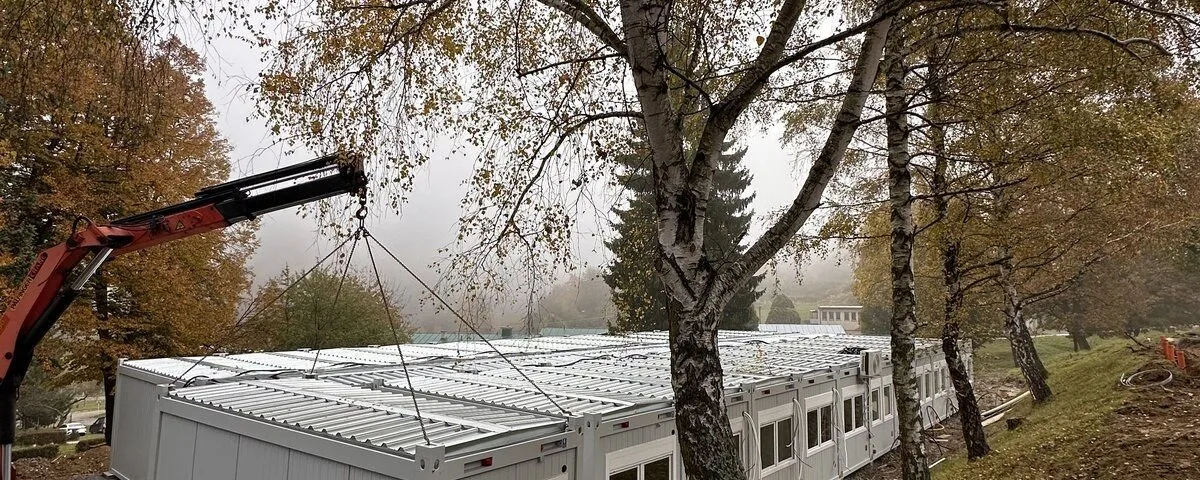
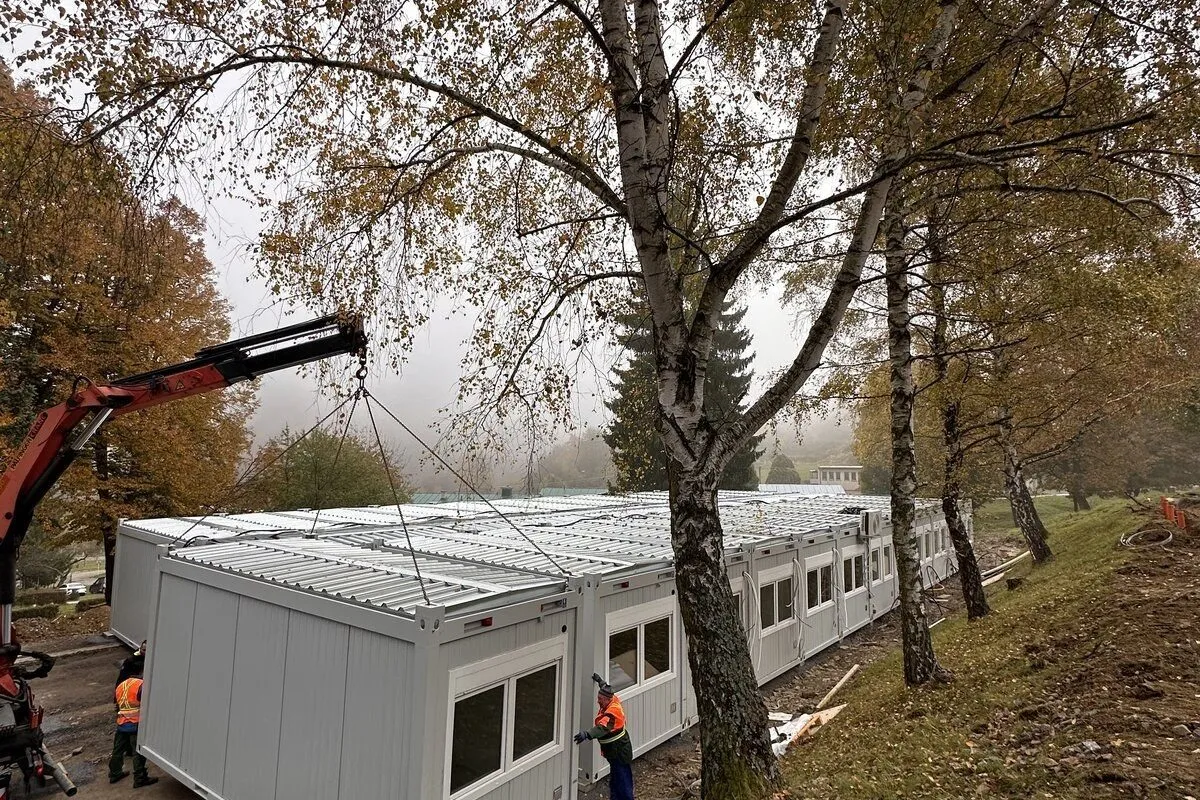
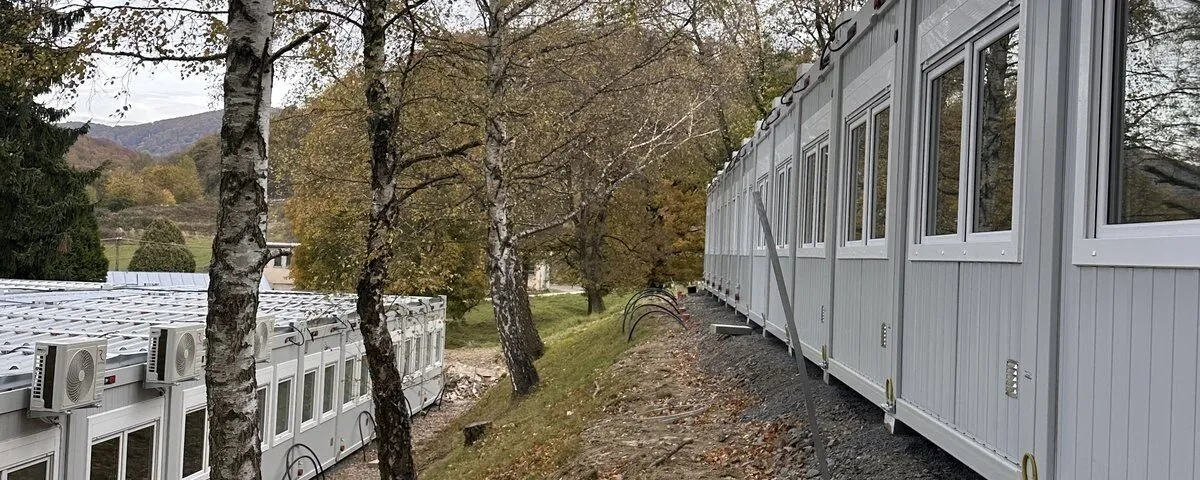
Civil-protection container programmes across the EU. Flood and disaster response, refugee and displaced-persons accommodation, field command posts. Reference deployment: Czech 25-040 emergency accommodation, 19 units, EI 30 fire resistance, EXC2 steel, RAL 5010 frame.

EMERGENCY SERVICES · hall view
EMERGENCY SERVICES · weld + paint
EMERGENCY SERVICES · finished unit

Specifications

Fire
EI 30
Steel
EXC2
Envelope
PIR sandwich
Frame
RAL 5010

Sector brief

Emergency-services procurement is the customer set that cannot afford a slipped delivery. When a regional flood, a wildfire evacuation, or a sudden displaced-persons intake forces a civil-protection authority to stand up housing, sanitation, and command capacity inside a week, the container has to arrive welded, painted, fire-rated, and signed off. Specification slips and missed lead times are not commercial issues in this sector. They are humanitarian ones.

Tanax Containers supplies civil-protection and disaster-response programmes through the same engineering and production chain we run for national defence and fire-and-rescue work. The hall in Bánovce nad Bebravou cuts, welds, blasts, paints, and fits out the unit under one roof. Documentation ships with the steel.

Our reference deployment in this sector is the Czech emergency accommodation programme 25-040: 19 container units engineered for civil-protection use, with EI 30 fire resistance, an EXC2 execution class to EN 1090, PIR sandwich roof construction, and a RAL 5010 gentian-blue frame. The bid was submitted in November 2025 and the dossier is the template we now run every emergency-services tender against.

Where these containers actually land

Emergency-services use cases are narrower than the marketing literature suggests. We see four real deployment patterns, and we design for them specifically.

Flood and disaster response. Regional authorities pre-position container modules in warehouses or municipal yards, ready to truck out when a flood gauge or wildfire alert triggers the response plan. The unit has to ride on a standard low-loader, settle on rough ground without a full foundation, and be habitable within hours of arrival. Sanitary modules and accommodation cells dominate this configuration.

Refugee and displaced-persons accommodation. Longer-duration deployments, weeks to months, sometimes across a heating season. The envelope has to handle real winter, the fire rating has to meet building-code-equivalent standards because the unit becomes a residence, and the layout has to support family use, not bunkhouse use. The Czech 25-040 programme sits squarely in this category.

Field command posts. Smaller fleets, higher fit-out. Briefing room, communications bench, separable signals area, electrical distribution that can take a generator feed and a grid feed without reconfiguration. PIR sandwich envelope, RAL exterior in the agency livery, AC for summer comms-room heat load.

Mobile sanitation and water support. WC, shower, laundry, kitchen, septic, and water-tank containers that follow the accommodation fleet into the deployment site. Always ISO-stackable. Often hot-dip galvanised for repeat redeployment cycles.

The Czech 25-040 reference

The 25-040 bid documents a complete civil-protection accommodation specification, and it has become our baseline for the sector.

  • 19 container units
  • EXC2 execution class to EN 1090-1, structural steel with full traceability
  • EI 30 fire resistance per EN 13501-2 on the relevant envelope elements
  • PIR sandwich roof construction
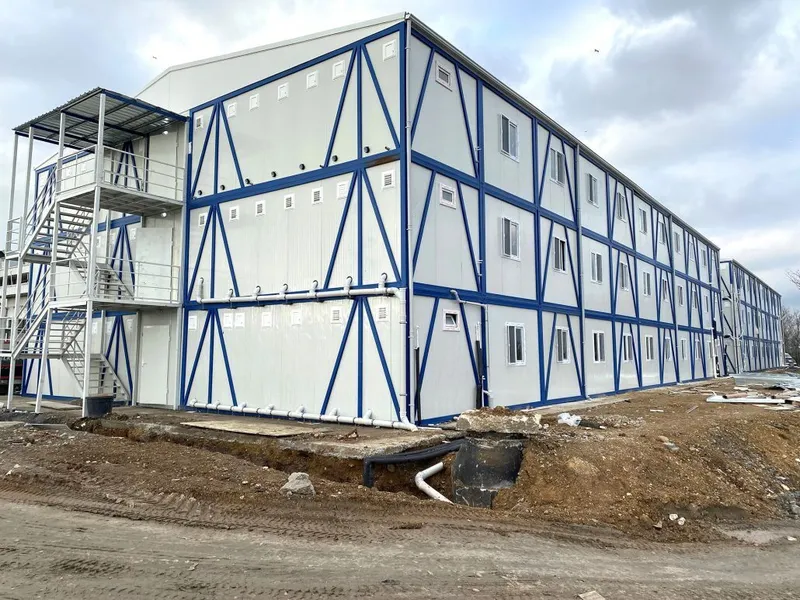
  • RAL 5010 gentian-blue frame, the standard EU civil-protection and government livery
  • Submitted November 2025

EI 30 is the resistance class that matters in residential-use emergency accommodation. The "E" criterion is integrity, the "I" criterion is insulation, and the 30 is the minute count over which the assembly must resist a standardised fire test without losing either. For accommodation containers, EI 30 keeps the envelope intact long enough to evacuate occupants and to give a fire-and-rescue response time to arrive. EI 30 is what national codes typically require when a container is treated as a residential unit rather than a storage box.

EXC2 to EN 1090-1 is the European execution class for most steel structures that carry people. Welding is qualified to EN ISO 9606, material is traceable to EN 10204 3.1 certificates, and the production line runs under ISO 3834-2. The 25-040 dossier shipped with all of it.

RAL 5010 gentian blue is not a paint choice. It is the recognisable livery used across European civil-protection, emergency-management, and public-administration fleets. When a container is meant to be visible from the air, from the road, and from a press camera as a state response asset, RAL 5010 is the colour that signals it.

Compliance and procurement path

Emergency-services tenders run through national civil-protection authorities, regional disaster-management offices, and the EU Civil Protection Mechanism. Our compliance stack covers all three.

  • EN 1090-1 EXC2 execution.
  • ISO 9001 quality, ISO 14001 environmental, ISO 3834-2 welding.
  • AQAP 2110:2017 NATO quality assurance (carries weight in dual-use civil-protection / defence procurement).
  • EI 30 and REI 30 fire resistance available per EN 13501-2.
  • EN ISO 8501 Sa 2.5 surface preparation, C3 or higher paint systems on request.
  • Welder qualification to EN ISO 9606.
  • Material certificates to EN 10204 3.1.
  • PN-HD 60364 low-voltage electrical work.

For Czech-market tenders (NEN CZ, Tendermarket, ministerial direct calls) we respond with the full Slovak-Czech bilingual dossier. For Slovak HaZZ and MoI calls we run the same dossier in Slovak. For EU-wide calls through the Civil Protection Mechanism or rescEU adjacent programmes, we add the English documentation set and the NATO CAGE 4094M cross-reference.

Typical configurations

Accommodation cell (25-040 baseline). External 6058 × 2438 × 2800 mm. PIR sandwich envelope. EI 30 envelope elements. EXC2 frame. RAL 5010 exterior. Electrical distribution, lighting, sockets, optional AC. Family-grade or bunkhouse layouts.

Sanitary module. WC, shower, laundry, kitchen. Septic tank and water tank options. ISO 1CC stackable for transport. Hot-dip galvanised on request for multi-deployment fleets.

Field command post. PIR sandwich envelope, RAL 5010 or agency-specified livery, briefing room and signals area, AC, electrical distribution to PN-HD 60364, generator-and-grid switchover panel on request.

Storage and logistics container. ISO 20 ft or 40 ft, CSC-plate certified, RAL 5010 or buyer livery. Used for pre-positioned response stock, decontamination kit, medical supplies, generators.

Special purpose. Fuel containers, water-treatment skids, MELIDA-style accommodation, REI 30 fire-rated builds where structural load resistance is required in addition to integrity and insulation.

Engagement model

Three of our four engagement models apply to emergency services:

  1. Custom build to spec. The dominant model for civil-protection programmes. Your specification or our engineering review, agreed drawings, fixed price, lead time. This is how 25-040 is structured.
  2. Framework / call-off. Multi-year framework where the authority pre-agrees pricing and lead time and calls off in batches as the deployment posture changes. Used in defence, available to civil-protection authorities on the same terms.
  3. Subcontract under prime. Where a national civil-protection agency contracts a domestic prime and we deliver the steel build under their QA chain. EN 1090 EXC2 fabrication, AQAP 2110 process, full per-unit dossier into the prime's handover pack.

Lead times

  • Custom build to spec: 10 to 16 weeks from engineering sign-off, depending on volume and finish.
  • Framework call-off: as agreed in the framework, with slot held against the production calendar.
  • Hot-dip galvanizing adds 1 to 2 weeks.
  • Extended fire-rating treatments (REI 30, hardened envelope) add 1 to 2 weeks.

For genuine emergency call-outs against a standing framework, we hold pre-engineered configurations in our drawings library so a call-off can move into production within days of authorisation.

FAQ

What is the difference between EI 30 and REI 30, and which one do I need? EI 30 is integrity and insulation for thirty minutes under the standardised fire-test curve in EN 13501-2. REI 30 adds R for structural load-bearing capacity over the same period. EI 30 is the right specification for most accommodation, sanitary, and command-post containers, where the envelope has to hold but the unit is not load-bearing. REI 30 is what we deliver when the container is stacked under load or carries a roof structure, for example the two-floor MELIDA accommodation programme.

Why RAL 5010 specifically? It is the de facto civil-protection livery across most of continental Europe. Slovak, Czech, German, and Austrian public-administration fleets use it to signal state response capacity. When an authority asks for "the standard blue" without naming a code, RAL 5010 is what they mean. We mix it in our own paint booth from the certified base.

Can you deliver inside a fortnight for a live emergency? Not from a cold start. From a standing framework or a pre-engineered drawing in our library, we can move into production immediately and ship pre-positioned stock the same day if it is in the yard. The honest answer is that emergency-services procurement only works on emergency timelines when the procurement happened months earlier and the framework is already in place.

Does the Czech 25-040 specification translate to other EU markets? Yes. EI 30 to EN 13501-2 is a pan-European classification, EXC2 to EN 1090 is the relevant execution class in any EU member state, and RAL 5010 is recognised across European civil-protection fleets. The 25-040 dossier transfers to Slovak, Polish, German, and Austrian civil-protection procurement with translated covers and re-issued language-of-record certificates.

What documentation ships with each unit? Per-unit dossier: WPS / PQR sheet for the relevant joints, EN 10204 3.1 material certificate, paint thickness report, FARO 3D geometric inspection record, fire-classification reference for the EI 30 envelope assembly, CSC plate where applicable, warranty terms, and multilingual operator manual. Programme-level dossiers add weld-procedure qualification records and material traceability for audit.

Can these containers be redeployed across multiple emergencies? Yes. The hot-dip galvanised sanitary fleet for the Slovak HaZZ has cycled through multiple call-outs without structural degradation. For repeat-redeployment use we recommend hot-dip galvanizing on sanitary and storage units, and a C3 or C4 paint system on accommodation units, with a refresh cycle handled at our paint booth between deployments.

Do you handle export delivery to other EU member states? Standard for us. Default term is EXW Bánovce nad Bebravou; DAP and DDP are available on request with CMR documentation. The 25-040 programme ships into Czechia, our adjacent export market. Slovak, German, Austrian, and Polish deliveries are routine.

What is the difference between this and a standard ISO storage container? A standard ISO storage container is a steel box rated for transport and CSC-plated for stacking. An emergency-services accommodation or command-post container is a habitable building on a steel chassis, with the envelope rated to EI 30, the structure executed to EXC2, the electrical work to PN-HD 60364, and the finish to the agency livery. Different product, different specification, different procurement.