Flat rack, open top or hard top: 42 100 kg against 28 230 kg
When a load will not go through a standard container door, the choice is usually described as flat rack or open top. That framing hides the number that decides most cases, and it leaves out a third option entirely.
The number: a 20 ft flat rack is rated to 42 100 kg of payload. A 20 ft open top is rated to 28 230 kg. That is 49 percent more on the same 6058 mm footprint, and it is the reason a heavy machine goes on a flat rack even when it would physically fit through a roof opening.
The three options, side by side
| 20 ft flat rack | 20 ft open top | 20 ft hard top | |
|---|---|---|---|
| Internal length | 5638 mm | 5898 mm | 5898 mm |
| Internal width | 2438 mm | 2350 mm | 2332 mm |
| Internal height | 2233 mm | 2350 mm | 2373 mm |
| Roof opening | full, no roof | 5652 x 2190 mm | 5570 x 2210 mm |
| Roof type | none | tarpaulin on removable crossbars | removable steel panels |
| Tare | 2900 kg | 2250 kg | 2890 kg |
| Max payload | 42 100 kg | 28 230 kg | 27 590 kg |
| Max gross | 45 000 kg | 30 480 kg | 30 480 kg |
Note the last two rows. The flat rack is the only one of the three rated above the standard 30 480 kg gross: it is built to 45 000 kg. The open top and the hard top are ordinary ISO boxes with the roof taken off, and they inherit the ordinary limit.
Note also the width. The flat rack is 2438 mm wide inside, because there are no side walls to eat into it. The open top loses 88 mm to its walls. On a load that is close to the limit, that is the difference between fitting and not.
When the flat rack is right
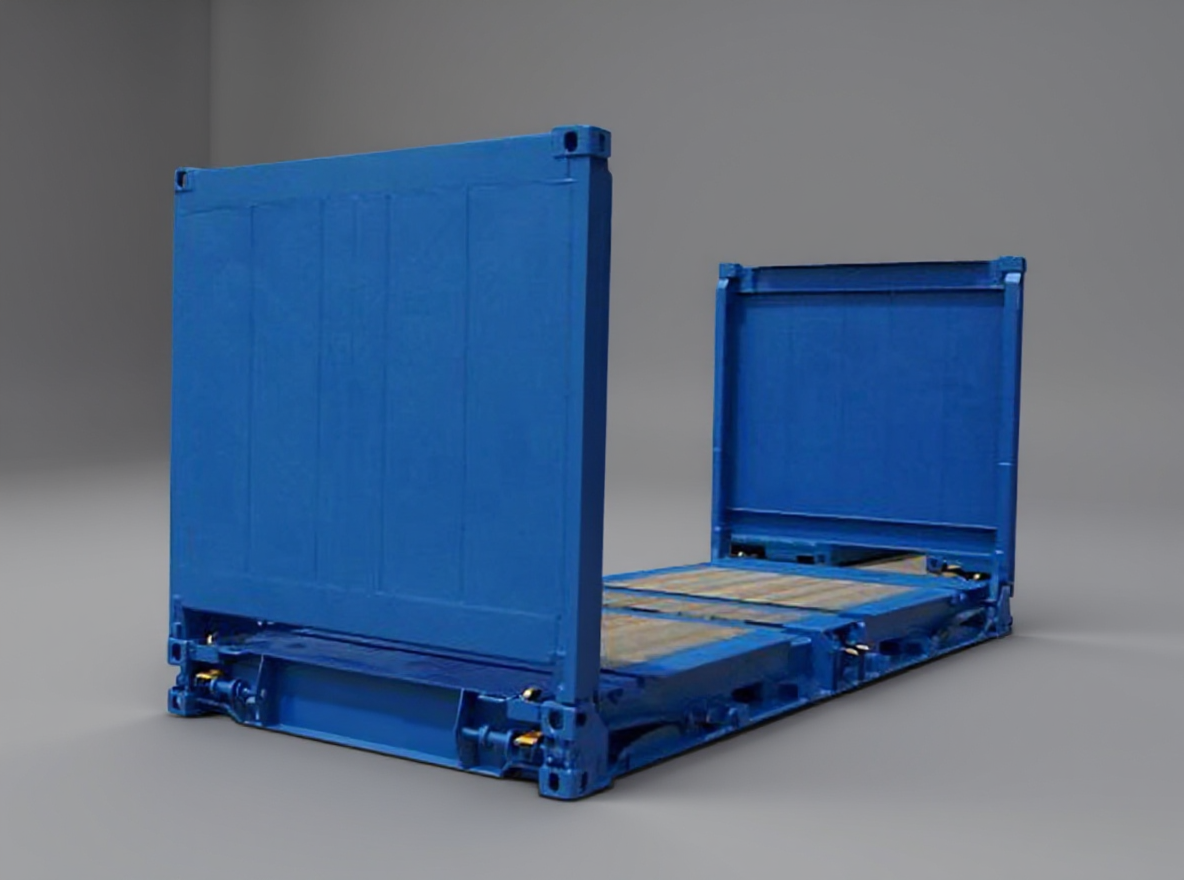
A flat rack is a deck with two end walls, solid or foldable, and nothing else. It suits:
- Heavy loads. 42 100 kg on the 20 ft, 24 120 kg on the 40 ft whose own tare is 6360 kg.
- Out of gauge loads. With no side walls, cargo can overhang. Nothing else on this list allows that.
- Side or end loading. Cranes and forklifts can approach from any direction, which matters when the load cannot be lifted straight down.
- Lashing on an open deck. Corner castings at all eight corners give a rigging plan somewhere to attach.
The cost is exposure. There is no roof and no sides, so weather protection is the shipper's problem, and the 2233 mm internal height is the lowest of the three.
When the open top is right
An open top is a normal box with a tarpaulin roof on removable crossbars. It suits loads that must be lowered in from above but still want four walls around them: bulk in big bags, machinery taller than the door, glass and stone on frames.
The dimension that governs the lift is the roof opening: 5652 x 2190 mm on the 20 ft, 11 806 x 2230 mm on the 40 ft. That is smaller than the internal floor in both directions, so a load that fits the floor does not automatically fit through the roof. Measure the opening, not the box.
Many units also carry a pivoting header bar, so the door end can be opened to its full 2280 mm rather than the fixed header height.
The option most comparisons omit: the hard top
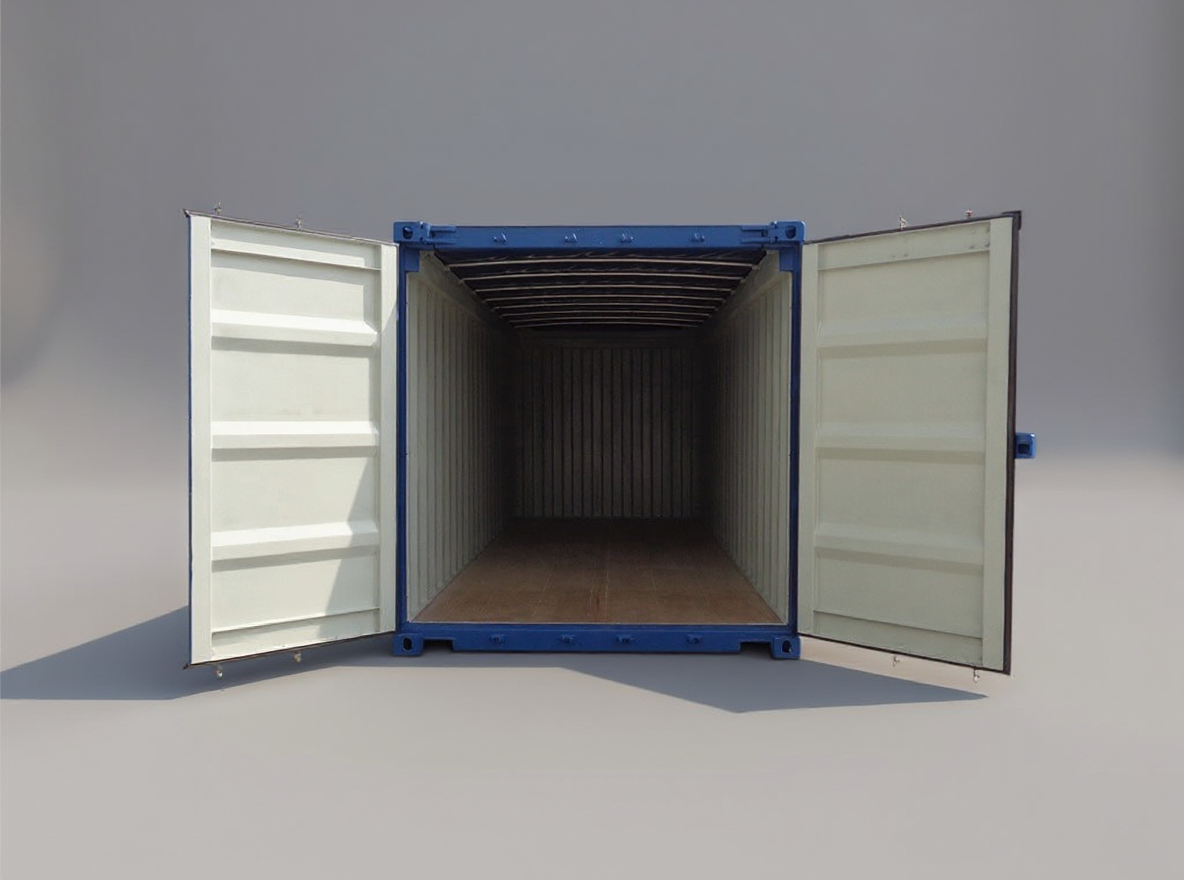
A hard top is an open top with removable steel roof panels instead of a tarpaulin. It gives up 640 kg of payload against the open top and 18 mm of internal width, and in exchange it gives:
- A weatherproof, lockable roof rather than a sheet
- A roof that carries a stacking load, so the unit behaves like a normal box in a stow
- Security a tarpaulin cannot offer
If the cargo is valuable, the route is long, or the unit will be stacked, the hard top is usually the honest answer and it rarely appears in the comparison.
The 40 ft High Cube hard top adds 2678 mm of internal height and a 2567 mm door opening.
Choosing in one pass
- Is the load over 28 tonnes, or over gauge? Flat rack. Nothing else is rated for it.
- Must it come in from above, and does it need walls? Open top or hard top.
- Does it need to be weatherproof, secure, or stacked? Hard top over open top.
- Measure the roof opening, not the internal floor, before booking either.
- Check the gross limit on your route. 45 000 kg on a flat rack is only useful where the road and the vessel allow it.
FAQ
How much can a 20 ft flat rack carry? 42 100 kg of payload, at 45 000 kg maximum gross with a 2900 kg tare. A 20 ft open top carries 28 230 kg at 30 480 kg gross.
What is the roof opening of a 20 ft open top? 5652 x 2190 mm. On the 40 ft it is 11 806 x 2230 mm, and on the 40 ft High Cube 11 786 x 2190 mm.
What is the difference between an open top and a hard top? The roof. An open top uses a tarpaulin on removable crossbars; a hard top uses removable steel panels. The hard top is lockable and stackable and carries 640 kg less on the 20 ft.
Can cargo overhang a flat rack? Yes, which is the point of it. There are no side walls, so out of gauge loads are handled on a flat rack rather than in a box.
Send the dimensions and the weight and we will tell you which of the three the load actually needs, or if you need a site access unit instead, see how to choose a gatehouse by its numbers. Request an offer.
Related guides
Two floor container buildings: corner castings, stairs and REI 30
A container building two floors high is decided in the factory. The corner castings, the stair brackets and the REI 30 floor between storeys are all fixed before the module leaves the hall.
20ft Double Door Containers: Side-Loading vs End-Door Workflow
How double-door 20ft containers change packing sequence, unloading speed, and yard layout requirements compared to standard end-door units.
Vending booth, sales kiosk or gatehouse: picking the unit by its numbers
Four gatehouse units, 3.5 m2 or 7.3 m2, with none, one or three glazed openings. The specification they share, what 1.6 kN/m2 of snow load and EXC2 to EN 1090-1 actually buy, and when the answer is an office module instead.
Have a specification in mind?
Send it through the quote form and the engineering review returns a fixed price and lead time, typically within 3 to 5 working days.